A good braider does more than make your hair look nice for the photos. They protect your edges, work at a tension you can live with, keep their setup clean, and tell you when the style you have asked for is wrong for your hair. A poor one can leave you with sore edges, breakage and a set that loosens in a fortnight.
The hard part is that almost everyone looks great on Instagram. Here is how to tell a braider you can trust from a nice feed, what to check before you book, and the questions that get you a straight answer.
Start with the style, not the salon
Braiding is specialised. Someone brilliant at knotless and boho work is not automatically the right person for stitch cornrows or faux locs, and the other way round.
Decide what you actually want first, then look for braiders who do that style often. A feed full of the exact look you are after is a better sign than a feed full of variety.
If you are not sure what you want yet, our style pages explain what each one involves, who it suits and what it costs, so you can book with a clear ask rather than leaving it to chance on the day.
Look at their actual work, properly
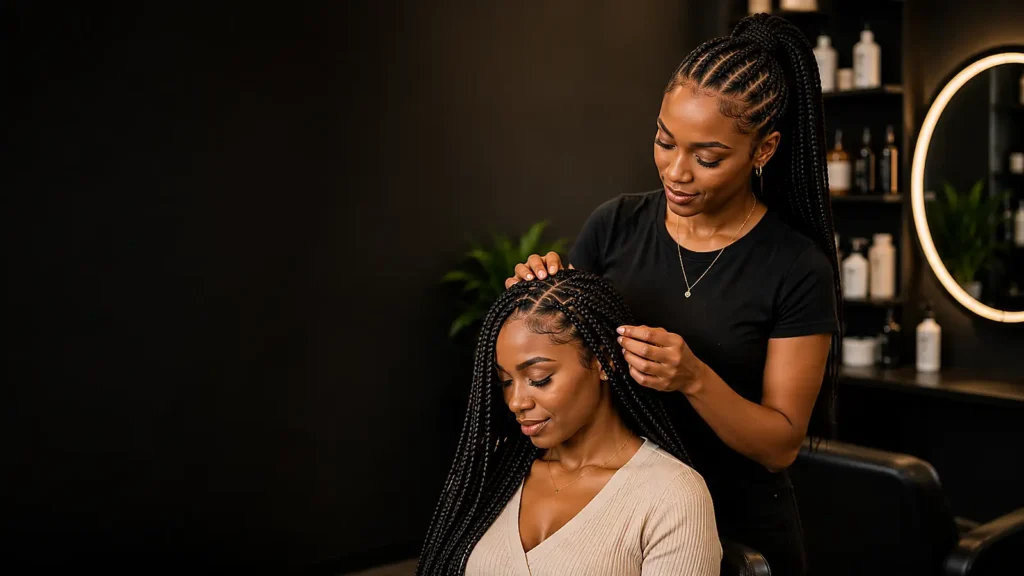
Scroll past the hero shots. The things that tell you most are the parts braiders do not always style for the camera: clean, even partings, a neat hairline that is not pulled to breaking point, and roots that lie flat without tension knots.
Look for photos taken on hair like yours, in texture and length, not just the longest, thickest installs.
Better still are the unglamorous shots: the back of the head, a close-up of the nape, a set photographed a week or two in rather than only fresh out of the chair. A braider who posts those is confident in the work that does not get filtered.
The tension question is the important one
Most braiding damage comes from one thing: too much tension at the root. Tight braids that sting on day one, little bumps along the hairline, or a headache after a fresh install are all warnings, not normal.
The best braiders are known for a comfortable tension and will happily talk about it.
Ask directly how they handle fine or fragile edges, and whether they will go larger or use a knotless method to keep the pull down.
A braider who takes that seriously, and who tells you when a size is too small or too heavy for your hair, is looking after you. One who insists tightness means it will “last longer” is not.
Read the reviews, then read between them
Booking platforms, Google and word of mouth all help, but read past the star rating. Look for repeat clients, comments about how edges and scalp felt afterwards, not just the look, and how the braider responded to any complaint.
A handful of detailed, specific reviews beats a wall of one-line five-stars. If a braider has a steady stream of people coming back, that is the strongest signal there is.
Check the basics: hygiene, time and communication
Clean tools, clean chair, clean space. It is a fair thing to expect and a fair thing to ask about, in a salon or in someone’s front room. While you are at it, get a sense of how they communicate. Do they reply clearly, give you a realistic length of appointment, and explain what they need from you beforehand? Vague or rushed answers now tend to mean a vague, rushed experience later.
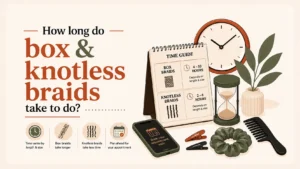
Realistic timing matters too. Small knotless or detailed cornrows take hours; a braider promising a full head of small braids in ninety minutes is either cutting corners or about to keep you far longer than they said.
Pricing should be clear before you sit down
A trustworthy braider gives you a straight total: the price, whether hair is included, how many packs your style needs, and whether take-down is extra.
Prices vary a lot by style, size, length and area, which is normal. What is not normal is a number that keeps moving, or a cheap quote that balloons once you have bought the hair. If you cannot get clear pricing in a message, expect a surprise at the end.
Salon, home or mobile
Where someone works says little about how good they are. Plenty of excellent braiders work from home or travel to you, and plenty of salons are average.
A home-based braider may be cheaper and more personal; a salon may offer more availability and a more formal setup; a mobile braider saves you the trip, which helps if sitting for hours away from home is hard.
Pick the setup that suits you, then judge the braider on the things above, not the address.
Red flags worth walking away from
A few things should give you pause: no photos of their own work, only borrowed or stock images, pressure to book a deposit before any real conversation, dismissing your questions about tension or edges, prices that change without explanation, or a refusal to say what is and is not included. None of these are about being expensive or cheap; they are about whether the braider is straight with you.
Questions to ask before you book
Send these in a message and you will learn most of what you need from how they answer:
- How often do you do this style, and can I see recent examples on hair like mine?
- What size and length do you recommend for my hair, and why?
- How do you keep tension comfortable, especially at the hairline?
- What is the total price, is hair included, and how many packs do I need?
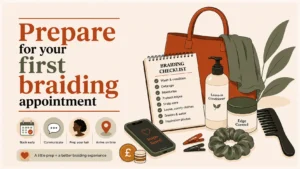
- How long will the appointment take, and how should I come prepared?
- Is take-down included or charged separately?
Find a braider near you
Once you know the style you want, the next step is to compare a few braiders in your area who do it. Browse by city below, or start from the style you are after.
Frequently asked questions
- How do I know if a braider is any good before I book?
- Look for a feed full of the exact style you want, on hair like yours, including unglamorous shots like the nape and partings. Read reviews for comments on tension and how edges felt afterwards, and check whether clients come back. Then message them and judge how clearly they answer.
- What should I ask a braider before booking?
- How often they do your style, what size and length they recommend and why, how they keep tension comfortable, the full price and whether hair is included, the appointment length, and whether take-down is extra. Clear answers are a good sign; vague ones are not.
- Are home-based braiders as good as salons?
- They can be. Where a braider works says little about quality. Judge them on their portfolio, reviews, tension, hygiene and how clearly they communicate, not on whether they have a salon address.
- What are the warning signs of a bad braider?
- No photos of their own work, pressure to pay a deposit before any real conversation, brushing off questions about tension or edges, pricing that keeps changing, and the idea that tight braids are a good thing. Any of those is a reason to look elsewhere.
- How much should I pay for a good braider?
- It depends on the style, size, length and area, and London sits highest. A fair braider gives you a clear total upfront. A higher price does not guarantee better work, and the cheapest quote is not a bargain if it climbs once you have bought the hair.